
2026
UI Design I & II
UI/UX Assignment Exhibition
Department of Multi Design
The Department of Multi Design at Kangwon National University
Essentials
Design System & Prototype
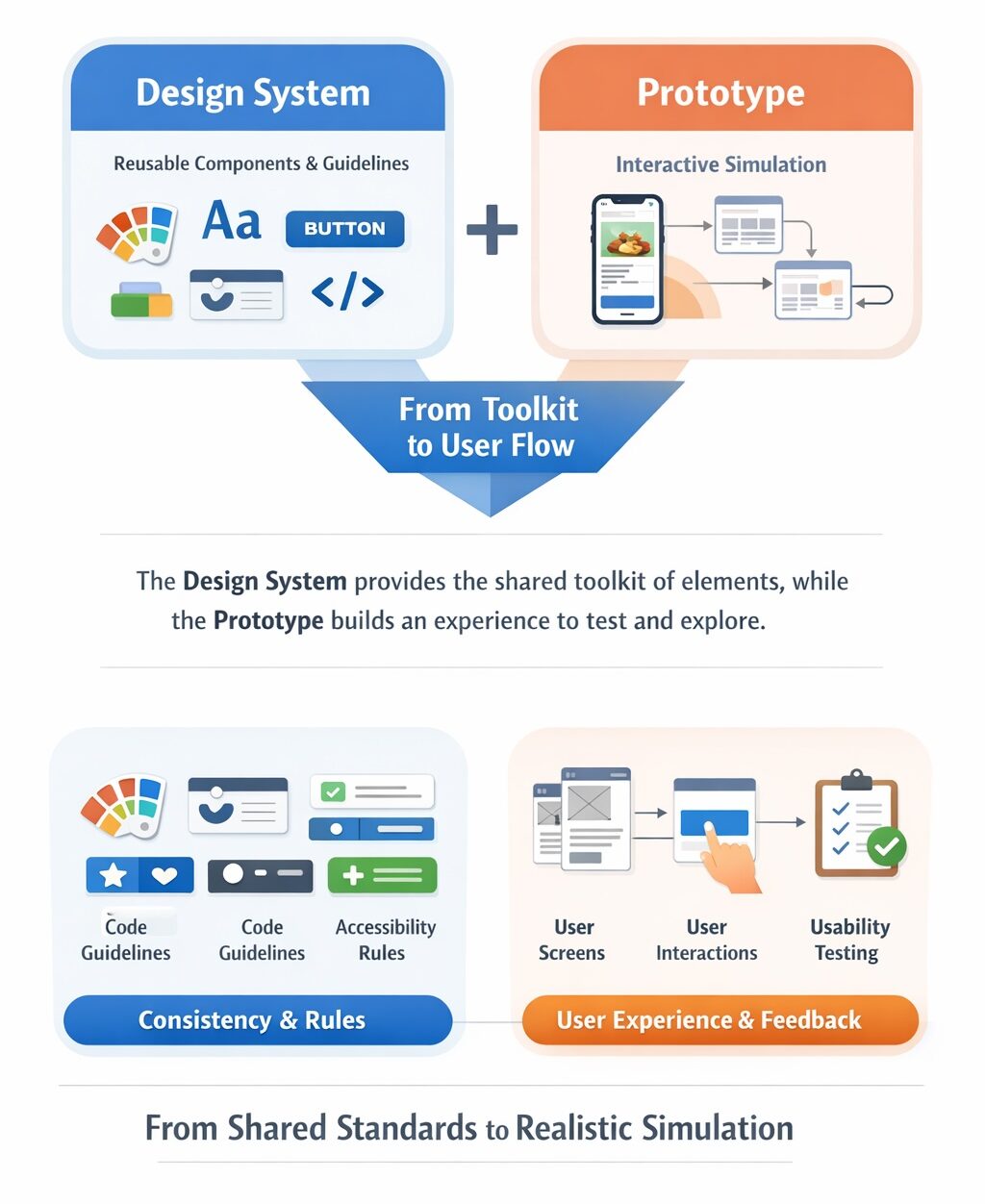
A design system is a structured collection of reusable components, visual styles, interaction patterns, accessibility rules, and implementation guidelines that work together as a shared language for designers and developers to create consistent, scalable, and efficient digital products, while a prototype is an interactive, experience-focused simulation built using those components and styles to demonstrate how specific screens connect, how users move through tasks, and how the product will look, feel, and respond in real use, allowing teams to explore ideas, communicate functionality, validate usability, and gather feedback before full development, meaning the design system acts as the foundational toolkit and rulebook that defines what elements exist and how they should behave across an ecosystem, whereas the prototype acts as a realistic preview of a particular solution assembled from that toolkit to test flows, interactions, and overall user experience in a tangible and scenario-driven way.
FAQ
Frequently Asked Questions
What do students learn in the UI Design course?
Students learn how to design clear, user-friendly digital interfaces. The course covers interaction principles and the basics of design systems, helping students create consistent and practical UI designs for real digital services.
When can students take the UI Design course?
Any student who has completed foundational design courses—such as color theory, typography, editorial design, or basic graphic design—can enroll. The class builds on visual design fundamentals and applies them to digital interfaces.
Is there a difference between UI Design 1 and UI Design 2?
Yes. UI Design 1 focuses on fundamental concepts and basic interface design, while UI Design 2 emphasizes more advanced, project-based applications. Taking both courses in sequence is recommended for deeper learning.
What should students prepare before taking the class?
An open mindset and willingness to learn are most important. A personal laptop is also recommended to participate smoothly in hands-on exercises and projects.