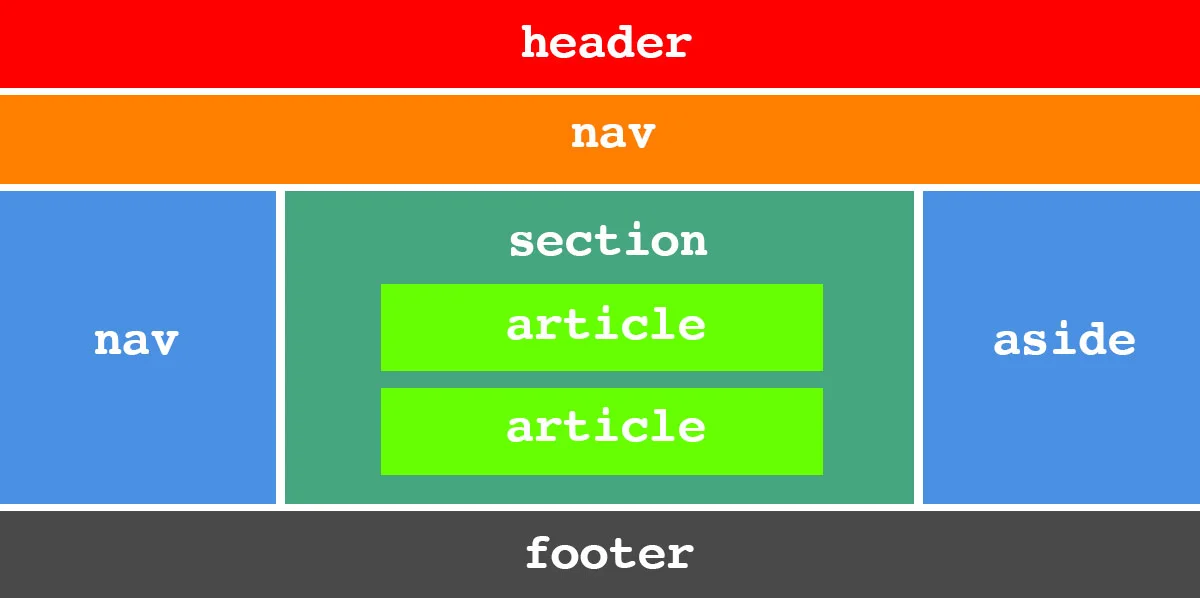
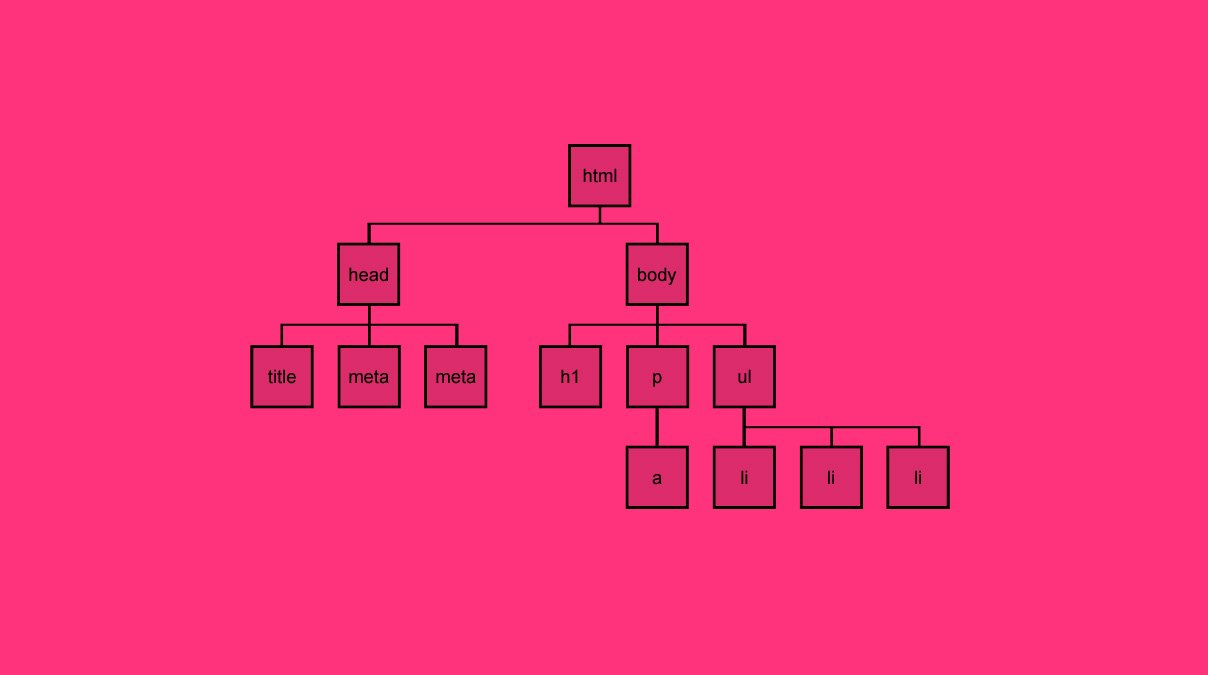
Heading은 문서에서 새로운 섹션(new section)이나 하위 섹션(sub-section)의 시작을 정의 할 때 완벽하게 효율적인 접근이지만, 더 명확하고 정확한 의미 구조(semantic structure)를 확립하기 위해 잘못 사용될 수 있는 여지가 있습니다.
div 엘리먼트는 주로 CSS를 걸 수 있는 스캐폴딩(scaffolding)으로 사용되는 섹션을 포함하는 데 사용할 수 있지만 큰 의미는 없습니다. 단면 처리(sectioning)에는 기사(articles), 머리글(headers), 바닥 글(footers) 및 내비게이션(navigation)과 같이 페이지의 특정 부분을 정의하는 데 사용할 수 있는 몇 개의 태그가 포함됩니다.
Articles과 Sections
article 요소는 독립형 콘텐츠 섹션을 마크업하는 데 사용할 수 있습니다. 예를 들어 블로그 게시물을 기사로 생각하거나 많은 기사가 담긴 전통적인 신문 페이지를 복제하는 경우 여러 번 생각하면 이 작업은 한 번만 사용할 수 있습니다.
섹션 요소는 보다 일반적인 섹션을 나타내며 예를 들어 기사를 분할하거나 챕터(chapters)를 나타내는 데 사용할 수 있습니다.
<article><sectionid="intro"><p>[An introduction]</p></section><sectionid="main_content"><p>[Content]</p></section><sectionid="related"><ul><li><ahref="that.html">That related article</a></li><li><ahref="this.html">This related article</a></li></ul></section></article>
div가 이러한 분리를 만드는 데 사용될 수 있지만 ( 또는 스타일링을 위해 이러한 구분이 필요하지 않은 경우에도 ) 훨씬 풍부하고 의미 있는 문서를 제공합니다.
Caution:HTML5 사양은 각 섹션의 시작 부분에 h1 요소를 사용할 수 있음을 제안합니다. 이 요소는 해당 섹션 앞의 모든 항목의 하위 제목이 됩니다. ( 위의 예에서 h1이 오프닝 article 태그 바로 다음에 오는 경우 html은 오프닝 섹션 태그 바로 다음에 해당 초기 h1의 하위 제목이됩니다.) 그러나 이 나사는 이전 버전과의 호환성을 보장하지 않으며 이를 이해하지 못하는 사용자 에이전트 (스크린 리더 포함)는 제대로 구조화된 제목 수준을 적용하지 않습니다. 섹션을 사용하지 않았다면 사용할 표제 수준을 고수하는 것이 좋습니다. (예 : 섹션 1과 관계없이 h2 등). 이것은 무엇인가를 망가뜨리거나 의미 나 의미를 손상시키지 않습니다.
Headers와 Footers
머리글(Headers)과 바닥 글(Footers)은 보다 전문화되고 자체 설명이 가능한 섹션을 제공합니다.
바닥 글(Footers)은 포함되어있는 섹션의 꼬리말입니다. 위의 예에서 첫 번째 바닥 글은 집필의 바닥 글이고 두 번째 바닥 글은 페이지의 바닥 글입니다.
Asides
Aside는 콘텐츠를 둘러싼 콘텐츠와 관련된 콘텐츠를 나타내는 데 사용할 수 있습니다. Article에서 관련 정보의 인용 내용 또는 미리보기를 생각해보십시오.
<sectionid="main_content"><h1>Tixall</h1><p>[All about Tixall]</p><aside><h2>Tixall Obelisk</h2><p>[A short note about Tixall Obelisk]</p></aside><p>[Maybe a bit more about Tixall]</p></section>
Aside는 콘텐츠를 둘러싼 콘텐츠와 관련된 콘텐츠를 나타내는 데 사용할 수 있습니다. Article에서 관련 정보의 인용 내용 또는 미리보기를 생각해보십시오.
우리가 이 구조에 집중하는 동안,
figures를 포함 시키려면, 그 일을하기위한 두 개의 태그가있을 수 있습니다.
Note:이는 또한 페이지 내 내비게이션 (<a href=”#overthere”> … 등)에도 사용될 수 있지만 모든 그룹 링크에 필요하지는 않으며 주요 그룹으로 설계되었습니다. 예를 들어, 저작권(copyright), 저자(author) 및 연락처 링크(contact link)는 바닥 글 요소(footer element)에 단독으로 배치할 수 있습니다.
Caution:이러한 새로운 HTML 5 요소의 스타일을 지정하려면 (예 : <div id = “content”> … 등을 사용하는 것보다 훨씬 낫습니다) 이전 버전의 브라우저, 특히 Internet Explorer에서 문제가 발생할 것입니다 버전 8 이하는 이러한 태그를 이해하지 못합니다. 그러나 HTML5 Shiv가 문제를 해결할 수 있습니다. head 부분에 삽입 된 작은 Javascript로, 브라우저를 새로운 HTML 5 태그를 사용할 수 있도록 CSS의 다양한 속성까지 스타일을 지정할 수 있습니다.
HTML 문서의 일반적인 섹션을 예를 들어, 기사(articles)를 분할하거나 챕터(chapters)를 나타내는 데 사용할 수 있습니다.
<article><sectionid="intro"><!-- An introduction --></section><sectionid="main_content"><!-- Main content --></section><sectionid="related"><ul><li><ahref="that.html">That related article</a></li><li><ahref="this.html">This related article</a></li></ul></section></article>
Note:전역 속성(Global Attributes)
HTML Tag : header
소개 콘텐츠 또는 내비게이션 기능이 포함 된 페이지 또는 섹션의 머리글(headers)입니다.
<body><header><!-- A header for the page. --></header><section><header><!-- A header for the section. --></header></section></body>
HTML Tag : footer
페이지 또는 섹션의 바닥 글(footers). 여기에는 포스트 스크립트, 부록 또는 관련 페이지에 대한 링크와 같은 내용이 포함될 수 있습니다.
<body><section><!-- stuff --><footer><!-- A footer for the section. --></footer></section><footer><!-- A footer for the page. --></footer></body>
HTML Tag : aside
콘텐츠를 둘러싼 콘텐츠와 관련이 있지만, 콘텐츠와 별개입니다. 기사(articles)에서 관련 정보의 인용 글 또는 미리보기는 aside 태그로 마크업 할 수 있는 콘텐츠의 예입니다.
<sectionid="main_content"><h1>Tixall</h1><!-- All about Tixall --><aside><h2>Tixall Obelisk</h2><!-- A short note about Tixall Obelisk --></aside><!-- A bit more about Tixall --></section>
<!DOCTYPEhtml><html><head><metacharset="utf-8"><title>Page layout 1</title> <style>body{font:80% arial, helvetica, sans-serif;margin:0;}#navigation{position: absolute;left:0;width:15em;}#content{color:#ccc;}</style></head><body><divid="navigation"><ul><li><ahref="">Biology</a></li><li><ahref="">Evolution</a></li><li><ahref="">Natural Selection</a></li><li><ahref="">Genetics</a></li></ul><ul><li><ahref="">Erasmus Darwin</a></li><li><ahref="">Lamarck</a></li><li><ahref="">Charles Darwin</a></li><li><ahref="">Wallace</a></li><li><ahref="">Dawkins</a></li></ul></div><divid="content"><h2>On the Origin of The Origin</h2><p>Darwin's father was dead set on his son becoming a cleric but even though the young rapscallion began to study theology he found worms much more interesting.</p><p>When a lonely man with a moustache asked Darwin to ride with him on his boat named after a dog, Darwin agreed and set off around the world fiddling with wildlife.</p><p>Some say it was a load of birds from a bunch of islands hundreds of miles off the Ecuadorean coast that inspired his now widely accepted explanation of the mechanism of evolution. "Why does that bird on that island have a beak like that while that finch on that island has a beak like that? AHA! I've got it! Natural Selection!" he thought. It wasn't actually quite like that, but, y'know, it's a fine, popular romantic myth.</p><h2>The Origin</h2><p>Upon return from his jaunt, Charles chronicled his escapades (as <em>The Voyage of the Beagle</em>) and got a bit carried away with barnacles, although his theory of evolution was always ticking away in the back of his mind.</p><p>Some 20 or so year after he returned to England, a Welsh naturalist by the name of Wallace popped up with a similar idea to Darwin's grand theory. Darwin got a move on.</p><p>In 1858 a paper jointly attributed to Darwin and Wallace was presented to the Linnean Society of London that sent rumbles across the establishment and really ticked off a fair few people. The next year saw the publication of Darwin's 500-page "abstract" - <em>On The Origin of Species by Means of Natural Selection or the Preservation of Favoured Races In The Struggle For Life</em> (or <abbr>OTOOSBMONSOTPOFRITSFL</abbr> for short).</p><p>Darwin, already a prominent arc in scientific circles, was propelled into megastardom.</p><h2>After The Origin</h2><p>Chuck D revised The Origin five times, toning down each one a bit more than the one before it, partly to appease his religious wife. Who also happened to be his cousin. But some years later he'd had enough of trying to disguise the logical conclusion that humans are descended from the same common ancestor as all other animals and his third classic, <em>The Descent of Man</em>, was published and <em>really</em> pissed off the religious establishment.</p></div></body></html>
페이지 레이아웃 2 : 2 columns – 2 단계 : 여백을 사용하여 네비게이션 열 아래에서 콘텐츠를 밀어냅니다.
<!DOCTYPE html>
<html>
<head>
    <meta charset="utf-8">
    <title>Page layout 2</title>
    <style>
        body {
            font: 80% arial, helvetica, sans-serif;
            margin: 0;
        }

        #navigation {
            position: absolute;
            left: 0;
            width: 15em;
        }
        #content {
            margin-left: 15em;
        }
    </style>
</head>
<body>
    <div id="navigation">
        <ul>
            <li><a href="">Biology</a></li>
            <li><a href="">Evolution</a></li>
            <li><a href="">Natural Selection</a></li>
            <li><a href="">Genetics</a></li>
        </ul>
        <ul>
            <li><a href="">Erasmus Darwin</a></li>
            <li><a href="">Lamarck</a></li>
            <li><a href="">Charles Darwin</a></li>
            <li><a href="">Wallace</a></li>
            <li><a href="">Dawkins</a></li>
        </ul>
    </div>
    <div id="content">
        <h2>On the Origin of The Origin</h2>
        <p>Darwin's father was dead set on his son becoming a cleric but even though the young rapscallion began to study theology he found worms much more interesting.</p>
        <p>When a lonely man with a moustache asked Darwin to ride with him on his boat named after a dog, Darwin agreed and set off around the world fiddling with wildlife.</p>
        <p>Some say it was a load of birds from a bunch of islands hundreds of miles off the Ecuadorean coast that inspired his now widely accepted explanation of the mechanism of evolution. "Why does that bird on that island have a beak like that while that finch on that island has a beak like that? AHA! I've got it! Natural Selection!" he thought. It wasn't actually quite like that, but, y'know, it's a fine, popular romantic myth.</p>
        <h2>The Origin</h2>
        <p>Upon return from his jaunt, Charles chronicled his escapades (as <em>The Voyage of the Beagle</em>) and got a bit carried away with barnacles, although his theory of evolution was always ticking away in the back of his mind.</p>
        <p>Some 20 or so year after he returned to England, a Welsh naturalist by the name of Wallace popped up with a similar idea to Darwin's grand theory. Darwin got a move on.</p>
        <p>In 1858 a paper jointly attributed to Darwin and Wallace was presented to the Linnean Society of London that sent rumbles across the establishment and really ticked off a fair few people. The next year saw the publication of Darwin's 500-page "abstract" - <em>On The Origin of Species by Means of Natural Selection or the Preservation of Favoured Races In The Struggle For Life</em> (or <abbr>OTOOSBMONSOTPOFRITSFL</abbr> for short).</p>
        <p>Darwin, already a prominent arc in scientific circles, was propelled into megastardom.</p>
        <h2>After The Origin</h2>
        <p>Chuck D revised The Origin five times, toning down each one a bit more than the one before it, partly to appease his religious wife. Who also happened to be his cousin. But some years later he'd had enough of trying to disguise the logical conclusion that humans are descended from the same common ancestor as all other animals and his third classic, <em>The Descent of Man</em>, was published and <em>really</em> pissed off the religious establishment.</p>
    </div>
</body>
</html>
<!DOCTYPE html>
<html>
<head>
    <meta charset="utf-8">
    <title>Page layout 3</title>
    <style>
        body {
            font: 80% arial, helvetica, sans-serif;
            margin: 0;
        }

        h2 {
            margin-top: 0;
        }

        #navigation {
            position: absolute;
            left: 0;
            width: 15em;
        }
        #content {
            border-left: 15em solid #ccf;
        }
    </style>
</head>
<body>
    <div id="navigation">
        <ul>
            <li><a href="">Biology</a></li>
            <li><a href="">Evolution</a></li>
            <li><a href="">Natural Selection</a></li>
            <li><a href="">Genetics</a></li>
        </ul>
        <ul>
            <li><a href="">Erasmus Darwin</a></li>
            <li><a href="">Lamarck</a></li>
            <li><a href="">Charles Darwin</a></li>
            <li><a href="">Wallace</a></li>
            <li><a href="">Dawkins</a></li>
        </ul>
    </div>
    <div id="content">
        <h2>On the Origin of The Origin</h2>
        <p>Darwin's father was dead set on his son becoming a cleric but even though the young rapscallion began to study theology he found worms much more interesting.</p>
        <p>When a lonely man with a moustache asked Darwin to ride with him on his boat named after a dog, Darwin agreed and set off around the world fiddling with wildlife.</p>
        <p>Some say it was a load of birds from a bunch of islands hundreds of miles off the Ecuadorean coast that inspired his now widely accepted explanation of the mechanism of evolution. "Why does that bird on that island have a beak like that while that finch on that island has a beak like that? AHA! I've got it! Natural Selection!" he thought. It wasn't actually quite like that, but, y'know, it's a fine, popular romantic myth.</p>
        <h2>The Origin</h2>
        <p>Upon return from his jaunt, Charles chronicled his escapades (as <em>The Voyage of the Beagle</em>) and got a bit carried away with barnacles, although his theory of evolution was always ticking away in the back of his mind.</p>
        <p>Some 20 or so year after he returned to England, a Welsh naturalist by the name of Wallace popped up with a similar idea to Darwin's grand theory. Darwin got a move on.</p>
        <p>In 1858 a paper jointly attributed to Darwin and Wallace was presented to the Linnean Society of London that sent rumbles across the establishment and really ticked off a fair few people. The next year saw the publication of Darwin's 500-page "abstract" - <em>On The Origin of Species by Means of Natural Selection or the Preservation of Favoured Races In The Struggle For Life</em> (or <abbr>OTOOSBMONSOTPOFRITSFL</abbr> for short).</p>
        <p>Darwin, already a prominent arc in scientific circles, was propelled into megastardom.</p>
        <h2>After The Origin</h2>
        <p>Chuck D revised The Origin five times, toning down each one a bit more than the one before it, partly to appease his religious wife. Who also happened to be his cousin. But some years later he'd had enough of trying to disguise the logical conclusion that humans are descended from the same common ancestor as all other animals and his third classic, <em>The Descent of Man</em>, was published and <em>really</em> pissed off the religious establishment.</p>
    </div>
</body>
</html>
<!DOCTYPE html>
<html>
<head>
    <meta charset="utf-8">
    <title>Page layout 4</title>
    <style>
        body {
            font: 80% arial, helvetica, sans-serif;
            margin: 0;
        }

        h2 {
            margin-top: 0;
        }

        #navigation1 {
            position: absolute;
            left: 0;
            width: 200px;
        }
        #navigation2 {
            position: absolute;
            right: 0;
            width: 150px;
        }

        #content {
            margin: 0 150px 0 200px;
        }
    </style>
</head>
<body>
    <div id="navigation1">
        <ul>
            <li><a href="">Biology</a></li>
            <li><a href="">Evolution</a></li>
            <li><a href="">Natural Selection</a></li>
            <li><a href="">Genetics</a></li>
        </ul>
    </div>
    <div id="navigation2">
        <ul>
            <li><a href="">Erasmus Darwin</a></li>
            <li><a href="">Lamarck</a></li>
            <li><a href="">Charles Darwin</a></li>
            <li><a href="">Wallace</a></li>
            <li><a href="">Dawkins</a></li>
        </ul>
    </div>
    <div id="content">
        <h2>On the Origin of The Origin</h2>
        <p>Darwin's father was dead set on his son becoming a cleric but even though the young rapscallion began to study theology he found worms much more interesting.</p>
        <p>When a lonely man with a moustache asked Darwin to ride with him on his boat named after a dog, Darwin agreed and set off around the world fiddling with wildlife.</p>
        <p>Some say it was a load of birds from a bunch of islands hundreds of miles off the Ecuadorean coast that inspired his now widely accepted explanation of the mechanism of evolution. "Why does that bird on that island have a beak like that while that finch on that island has a beak like that? AHA! I've got it! Natural Selection!" he thought. It wasn't actually quite like that, but, y'know, it's a fine, popular romantic myth.</p>
        <h2>The Origin</h2>
        <p>Upon return from his jaunt, Charles chronicled his escapades (as <em>The Voyage of the Beagle</em>) and got a bit carried away with barnacles, although his theory of evolution was always ticking away in the back of his mind.</p>
        <p>Some 20 or so year after he returned to England, a Welsh naturalist by the name of Wallace popped up with a similar idea to Darwin's grand theory. Darwin got a move on.</p>
        <p>In 1858 a paper jointly attributed to Darwin and Wallace was presented to the Linnean Society of London that sent rumbles across the establishment and really ticked off a fair few people. The next year saw the publication of Darwin's 500-page "abstract" - <em>On The Origin of Species by Means of Natural Selection or the Preservation of Favoured Races In The Struggle For Life</em> (or <abbr>OTOOSBMONSOTPOFRITSFL</abbr> for short).</p>
        <p>Darwin, already a prominent arc in scientific circles, was propelled into megastardom.</p>
        <h2>After The Origin</h2>
        <p>Chuck D revised The Origin five times, toning down each one a bit more than the one before it, partly to appease his religious wife. Who also happened to be his cousin. But some years later he'd had enough of trying to disguise the logical conclusion that humans are descended from the same common ancestor as all other animals and his third classic, <em>The Descent of Man</em>, was published and <em>really</em> pissed off the religious establishment.</p>
    </div>
</body>
</html>
<!DOCTYPE html>
<html>
<head>
    <meta charset="utf-8">
    <title>Page layout 5</title>
    <style>
        body {
            font: 80% arial, helvetica, sans-serif;
            margin: 0;
        }

        h1, h2 {
            margin: 0;
        }

        #header {
            background: #ccc;
        }

        #navigation {
            position: absolute;
            left: 0;
            top: 70px;
            width: 150px;
        }

        #content {
            margin-left: 150px;
        }
    </style>
</head>
<body>
    <div id="header">
        <h1>Charles Darwin</h1>
    </div>
    <div id="navigation">
        <ul>
            <li><a href="">Biology</a></li>
            <li><a href="">Evolution</a></li>
            <li><a href="">Natural Selection</a></li>
            <li><a href="">Genetics</a></li>
        </ul>
        <ul>
            <li><a href="">Erasmus Darwin</a></li>
            <li><a href="">Lamarck</a></li>
            <li><a href="">Charles Darwin</a></li>
            <li><a href="">Wallace</a></li>
            <li><a href="">Dawkins</a></li>
        </ul>
    </div>
    <div id="content">
        <h2>On the Origin of The Origin</h2>
        <p>Darwin's father was dead set on his son becoming a cleric but even though the young rapscallion began to study theology he found worms much more interesting.</p>
        <p>When a lonely man with a moustache asked Darwin to ride with him on his boat named after a dog, Darwin agreed and set off around the world fiddling with wildlife.</p>
        <p>Some say it was a load of birds from a bunch of islands hundreds of miles off the Ecuadorean coast that inspired his now widely accepted explanation of the mechanism of evolution. "Why does that bird on that island have a beak like that while that finch on that island has a beak like that? AHA! I've got it! Natural Selection!" he thought. It wasn't actually quite like that, but, y'know, it's a fine, popular romantic myth.</p>
        <h2>The Origin</h2>
        <p>Upon return from his jaunt, Charles chronicled his escapades (as <em>The Voyage of the Beagle</em>) and got a bit carried away with barnacles, although his theory of evolution was always ticking away in the back of his mind.</p>
        <p>Some 20 or so year after he returned to England, a Welsh naturalist by the name of Wallace popped up with a similar idea to Darwin's grand theory. Darwin got a move on.</p>
        <p>In 1858 a paper jointly attributed to Darwin and Wallace was presented to the Linnean Society of London that sent rumbles across the establishment and really ticked off a fair few people. The next year saw the publication of Darwin's 500-page "abstract" - <em>On The Origin of Species by Means of Natural Selection or the Preservation of Favoured Races In The Struggle For Life</em> (or <abbr>OTOOSBMONSOTPOFRITSFL</abbr> for short).</p>
        <p>Darwin, already a prominent arc in scientific circles, was propelled into megastardom.</p>
        <h2>After The Origin</h2>
        <p>Chuck D revised The Origin five times, toning down each one a bit more than the one before it, partly to appease his religious wife. Who also happened to be his cousin. But some years later he'd had enough of trying to disguise the logical conclusion that humans are descended from the same common ancestor as all other animals and his third classic, <em>The Descent of Man</em>, was published and <em>really</em> pissed off the religious establishment.</p>
    </div>
</body>
</html>
찰스 다윈 (Charles Darwin) : 이전 예제의 기본 원리를 스타일 업 한 버전입니다.
<!DOCTYPE html>
<html>
<head>
    <meta charset="utf-8">
    <title>Charles Darwin</title>
    <style>
        body {
            font: 80% arial, helvetica, sans-serif;
            background: #ccc url(./img/lizards2.gif);
            margin: 0;
        }

        .accessaid, h1 {
            position: absolute;
            height: 0;
            overflow: hidden;
        }

        #header {
            background: #036 url(./img/charlesdarwin.gif);
            height: 60px;
        }

        #navigation {
            position: absolute;
            top: 60px;
            margin-top: 0.5em;
            left: 0;
            width: 134px;
        }

        #navigation ul {
            margin: 0 0 1em 0;
            padding: 0;
            list-style: none;
        }

        #navigation ul a {
            color: white;
            text-decoration: none;
            display: block;
            background: #17a;
            border-left: 3px solid #28b;
            padding: 0 0.5em;
            margin: 0 1em 3px 1em;
        }

        #navigation a:visited {
            color: #ccc;
        }

        #navigation a:hover {
            background: #39c;
            border-color: white;
        }

        #content {
            border-left: 134px solid #069;
            background: white url(./img/lizards.gif) repeat-y;
            padding: 1px 20px 1em 40px;
        }
        h2 {
            font-size: 1.5em;
            color: #036;
        }

        h3 {
            font-size: 1.25em;
            color: #036;
        }

        #content img {
            width: 100px;
            height: 150px;
            padding: 1px;
            border: 1px solid #333;
            float: right;
            margin: 0 0 1em 1em;
        }

        #container {
            position: relative;
            width: 580px;
            border: solid #036;
            border-width: 0 3px;
            margin: auto;
        }
    </style>
</head>
<body>
    <div id="container">
        <div id="header">
            <h1>Charles Darwin</h1>
        </div>
        <div id="navigation">
            <p><a href="#content" class="accessaid">Skip navigation</a></p>
            <ul>
                <li><a href="">Biology</a></li>
                <li><a href="">Evolution</a></li>
                <li><a href="">Natural Selection</a></li>
                <li><a href="">Genetics</a></li>
            </ul>
            <ul>
                <li><a href="">Erasmus Darwin</a></li>
                <li><a href="">Lamarck</a></li>
                <li><a href="">Charles Darwin</a></li>
                <li><a href="">Wallace</a></li>
                <li><a href="">Dawkins</a></li>
            </ul>
            <ul>
                <li><a href="">Home</a></li>
                <li><a href="">About</a></li>
                <li><a href="">Contact Us</a></li>
                <li><a href="">Site map</a></li>
            </ul>
        </div>
        <div id="content">
            <h2>On the Origin of The Origin</h2>
            <p><img src="./img/darwin.jpg" alt="Darwin">Darwin's father was dead set on his son becoming a cleric but even though the young rapscallion began to study theology he found worms much more interesting.</p>
            <p>When a lonely man with a moustache asked Darwin to ride with him on his boat named after a dog, Darwin agreed and set off around the world fiddling with wildlife.</p>
            <p>Some say it was a load of birds from a bunch of islands hundreds of miles off the Ecuadorean coast that inspired his now widely accepted explanation of the mechanism of evolution. "Why does that bird on that island have a beak like that while that finch on that island has a beak like that? AHA! I've got it! Natural Selection!" he thought. It wasn't actually quite like that, but, y'know, it's a fine, popular romantic myth.</p>
            <h2>The Origin</h2>
            <p>Upon return from his jaunt, Charles chronicled his escapades (as <em>The Voyage of the Beagle</em>) and got a bit carried away with barnacles, although his theory of evolution was always ticking away in the back of his mind.</p>
            <p>Some 20 or so year after he returned to England, a Welsh naturalist by the name of Wallace popped up with a similar idea to Darwin's grand theory. Darwin got a move on.</p>
            <p>In 1858 a paper jointly attributed to Darwin and Wallace was presented to the Linnean Society of London that sent rumbles across the establishment and really ticked off a fair few people. The next year saw the publication of Darwin's 500-page "abstract" - <em>On The Origin of Species by Means of Natural Selection or the Preservation of Favoured Races In The Struggle For Life</em> (or <abbr>OTOOSBMONSOTPOFRITSFL</abbr> for short).</p>
            <p>Darwin, already a prominent arc in scientific circles, was propelled into megastardom.</p>
            <h2>After The Origin</h2>
            <p>Chuck D revised The Origin five times, toning down each one a bit more than the one before it, partly to appease his religious wife. Who also happened to be his cousin. But some years later he'd had enough of trying to disguise the logical conclusion that humans are descended from the same common ancestor as all other animals and his third classic, <em>The Descent of Man</em>, was published and <em>really</em> pissed off the religious establishment.</p>
        </div>
    </div>
</body>
</html>